A study by American scientists published in
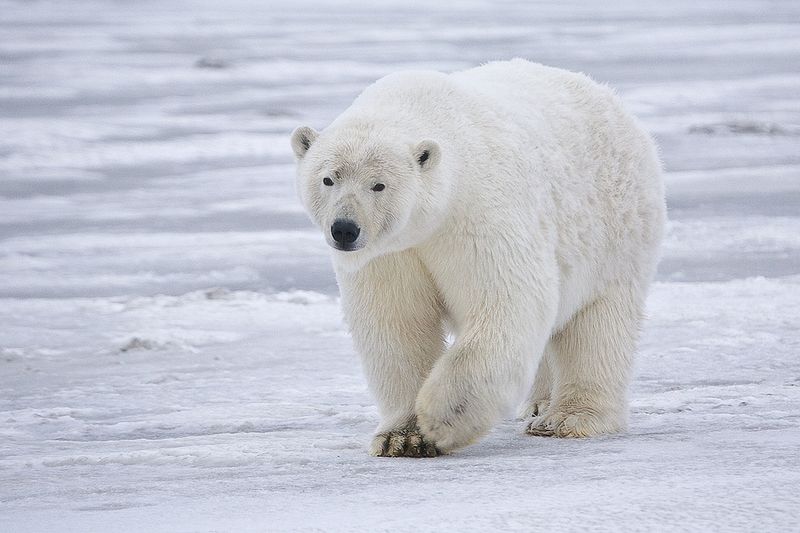
Polar Biology has highlighted the effect of climate change on the lifestyle of polar bears in ways that are not immediately apparent. Most people who have been following the plight of the polar bear are well aware of the fact that the bear is venturing further south into North America and even meeting and mating with grizzly bears producing hybrids with greater regularity than ever before. Fewer people are aware of the effects climate change is having on the lifestyles and mortality rates of the bears further north, which lived on the ice sheet and pack ice.
As the ice begins to melt and gets more sparse this means that polar bears are forced to swim to find other ice upon which to live and hunt from. This becomes a big problem when there is simply no ice nearby and polar bears are forced to swim for days, non-stop, through the open sea. The study revealed, by tracking the bears, the harsh lengths the melting of the ice has forced some polar bears to go to and the tragic and life-threatening consequences.
One polar bear being tracked swam a shocking 9 days and 687km (426 miles) without stopping, across the open ocean just to find land or floating ice. The bear lost 22% of her body fat and her yearling cub. This highlights the additional pressures the polar bear population is under as it tries to find food and suitable habitat in this changing world.
One of the reports authors, zoologist George M. Durner, said:
“This bear swam continuously for 232 hours and 687 km and through waters that were 2-6 degrees C,”
“We are in awe that an animal that spends most of its time on the surface of sea ice could swim constantly for so long in water so cold. It is truly an amazing feat.”
“It was simply more energetically costly for the yearling than the adult to make this long distance swim,”
“In prior decades, before 1995, low-concentration sea ice persisted during summers over the continental shelf in the Beaufort Sea.”
“This means that the distances, and costs to bears, to swim between isolated ice floes or between sea ice and land was relatively small.”
“The extensive summer melt that appears to be typical now in the Beaufort Sea has likely increased the cost of swimming by polar bears.”
“This dependency on sea ice potentially makes polar bears one of the most at-risk large mammals to climate change”
Although the IUCN red list lists polar bears as a vulnerable species the American government, both under Republican and Democrat administrations, have shown reluctance to acknowledge this and give the Polar bears the protected status they need. It is often alleged by campaigners that this is because it might hinder plans for American oil companies to exploit Alaska and the seas around it for oil or that oil companies may be forced to help pay for conservation programmes. If either of these theories are correct then it is a very sorry state of affairs indeed that no attempts have been made at a compromise that could save the polar bears.







 Posts
Posts


