WELCOME TO THE CFZ BLOG NETWORK: COME AND JOIN THE FUN

Half a century ago, Belgian Zoologist Bernard Heuvelmans first codified cryptozoology in his book On the Track of Unknown Animals.

The Centre for Fortean Zoology (CFZ) are still on the track, and have been since 1992. But as if chasing unknown animals wasn't enough, we are involved in education, conservation, and good old-fashioned natural history! We already have three journals, the largest cryptozoological publishing house in the world, CFZtv, and the largest cryptozoological conference in the English-speaking world, but in January 2009 someone suggested that we started a daily online magazine! The CFZ bloggo is a collaborative effort by a coalition of members, friends, and supporters of the CFZ, and covers all the subjects with which we deal, with a smattering of music, high strangeness and surreal humour to make up the mix.

It is edited by CFZ Director Jon Downes, and subbed by the lovely Lizzy Bitakara'mire (formerly Clancy), scourge of improper syntax. The daily newsblog is edited by Corinna Downes, head administratrix of the CFZ, and the indexing is done by Lee Canty and Kathy Imbriani. There is regular news from the CFZ Mystery Cat study group, and regular fortean bird news from 'The Watcher of the Skies'. Regular bloggers include Dr Karl Shuker, Dale Drinnon, Richard Muirhead and Richard Freeman.The CFZ bloggo is updated daily, and there's nothing quite like it anywhere else. Come and join us...

Search This Blog

WATCH OUR WEEKLY WEBtv SHOW

SUPPORT OTT ON PATREON

SUPPORT OTT ON PATREON
Click on this logo to find out more about helping CFZtv and getting some smashing rewards...

SIGN UP FOR OUR MONTHLY NEWSLETTER


Unlike some of our competitors we are not going to try and blackmail you into donating by saying that we won't continue if you don't. That would just be vulgar, but our lives, and those of the animals which we look after, would be a damn sight easier if we receive more donations to our fighting fund. Donate via Paypal today...


Showing posts with label extinctions. Show all posts

Wednesday, March 12, 2014

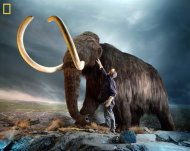
CRYPTOLINK: Woolly Mammoth or Thylacine? New Guide Helps Choose Which Species to Resurrect

A word about cryptolinks: we are not responsible for the content of cryptolinks, which are merely links to outside articles that we think are interesting (sometimes for the wrong reasons), usually posted up without any comment whatsoever from me. 


Updated Tues. March 4 at 12:30 p.m. ET.
The idea of bringing extinct species back to life has transitioned from science fiction to near reality in recent years, with some scientists saying the passenger pigeon — a bird that once clouded North American skies but went extinct due to over-hunting in the early 1900s —could reenter the world within the next several years.
But amidst the exciting prospects of seeing these birds take to the skies again, or perhaps one day spotting a woolly mammoth tromp through Siberia, some researchers have urged those involved in so-called de-extinction to carefully consider the ecological risks of reintroducing species to the wild — before choosing to bring back any particular species. Reintroduced species could pose risks by threatening other animals (by preying on them or spreading parasites); endangering humans with physical harm; or jeopardizing aspects of ecosystems humans rely on. [6 Extinct Animals That Could Be Brought Back to Life]
"This is very similar to any species you would reintroduce in the world," Axel Moehrenschlager, a researcher at the Center for Conservation Research at the Calgary Zoological Society in Canada, told Live Science. "Whenever you put a species back into a place where it has disappeared, there will be an array of risks."

Read on...

Thursday, August 06, 2009

IVORY BILLED WOODPECKER

John W. Fitzpatrick, Director of the Cornell Laboratory of Ornithology at Cornell University discusses the rediscovery of the Ivory-billed Woodpecker and the various questions that have been raised as to authenticity of the rediscovery. He played video and audio clips dealing with the rediscovery that had never been shown or played publicly. Fitzpatrick also dealt with the broader issues of species protection and conservation and noted the future field research that will be done in order to more fully determine that the Ivory-billed Woodpecker has indeed come back from supposed extinction.

Wednesday, August 05, 2009

FLEUR WRITES...

"I know how you were impressed by the stuffed eskimo curlew or, er, northern curlew, lol. But this here site is full of stuffed extinct beasts, some pictures I havent seen before".

http://www.taxidermy4cash.com/countdown.html

And you know what? She is absolutely right. The people who own the site have disabled the function by which we can steal photographs for the blog, and although we can still do it by other means, after they have expressly asked us not to, it does not seem ethical so you had better check it out for yourselves....

Thursday, July 09, 2009

OLL LEWIS: An Auk-ward Silence

Now, over to Oll Lewis, the CFZ ecologist (who also happens to be the bloke living in my spare room) who - every day - tells us about `Yesterday's News Today` with a bevy of bad puns....


Whenever a species becomes extinct it is a truly lamentable occurrence. I often wonder, late at night when I’m having problems getting to sleep, if the last survivors of a species are aware of their plight; did the last woolly mammoth endlessly trudge the icy tundra looking for others, cheerfully thinking that he might find a mate the next day or did he ever truly accept there would be no more of his kind? Perhaps I’m anthropomorphosising a bit much but if a last survivor of a species was aware of his plight it would be truly tragic.

The tragedy is only compounded when it is human activity that caused the extinction. Humans have caused many extinctions; two that spring readily to mind are that of the passenger pigeon (Ectopistes migratorius) and the great auk (Pinguinus impennis). Both species were huge in numbers until man started to hunt them intensively, but the story of the final demise of the great auk is a particularly sad one.

Ever since humans first encountered the great auk they hunted it, even as far back as 100,000 years ago; bones from great auk have been found in the remains of Neanderthal fires and the bird has appeared in a number of cave paintings. This predation was not a problem until the sixteenth century because the numbers taken by humans were easily eclipsed by reproduction. However, things were soon to change. Ships began to stop off at great auk breeding sites while en route to and from the Americas. At first these stops off would just be to replenish food stocks, but soon some ships would go as far as to herding hundreds of birds on board ship for needless mass slaughter.

The bird's feathers were in demand as well as its meat and many birds were probably killed for no greater reason than stuffing a rich mans pillow with its down or so its feathers could make a fetching decoration in a woman’s hat. The trade in the feathers and down of the great auk in Britain and Europe was so great it led to the near eradication of nesting sites on the east side of the Atlantic Ocean. Eventually the killing of great auks for their feathers was banned by Britain in 1794, but this was long after the species had started a terminal decline. A further blow came to the species on the west of the Atlantic when the eider duck was forced into near extinction and down collectors from North America switched their attention to the great auk in the late eighteenth century. The fact that great auk eggs were highly sought after by egg collectors did little to help the species’ long term survival prospects too, especially when the egg collectors found out that the great auks laid their eggs over a number of days so a collector could take considerably more eggs if he was prepared to wait around.

The last great auk ever found in Britain came ashore on Stac An Armin, St Kilda, Scotland and was tried as a witch by locals. It ended its life in July 1840 tied up for three days and beaten to a bloody pulp by locals armed with sticks.

Around this time, a single colony of great auks survived on the small volcanic island of Geirfuglasker, which was near Iceland and was inaccessible to humans. Disaster struck in 1830 when an undersea volcanic eruption caused Geirfuglasker to sink beneath the waves. Most of the surviving birds made it to the nearby island of Eldey, which unfortunately was accessible to humans. When news spread of the great awks' presence on Eldey several museums commissioned collecting parties to bring back as many dead great auks as possible to add to their taxidermy collections; the birds would fetch a high price due to their rarity. On 3rd July 1844, less than ten years after the colony had been discovered, the final breeding pair was located. The last two birds were strangled just before the egg they had been incubating was smashed.

One last solitary great auk was seen after the murder of the last breeding pair and their unborn chick. The last great auk was seen on the Grand Banks of Newfoundand in 1852. I wonder if he ever questioned where all the others like him were or if he knew he was alone.

Thursday, May 14, 2009

Good old Dr Daz: He always manages to come out with new stuff that I had never even heard of before. In the latest editions of the increasingly excellent Tetrapod Zoology he introduces us to a series of small, land-dwelling crocodilians from Pacific islands, which were alive only a few thousand years ago, and were certainly contemporaeneous (and I think that is how you spell it) with our own species. This is something that you certainly have to check out..

http://scienceblogs.com/tetrapodzoology/2009/05/mekosuchines_2009.php
http://scienceblogs.com/tetrapodzoology/2009/05/more_recently_extinct_crocs.php

Wednesday, April 08, 2009

GLEN VAUDREY: Looking for the great Auk


The last confirmed sighting of a happy and lively looking Great Auk took place on the Icelandic island of Eldey on 3 June 1844 and how do we know it is the last confirmed sighting, we have the bodies to prove it. Unfortunately the witnesses to this last sighting happened to be a couple of hunters who had just dispatched the birds. It is unlikely that they even knew the importance of that days hunt.

Like many reckless acts of violence it would come to be regretted in the years to come and such was this case. Iceland may have played host to the last known populations of this remarkable bird but it was left without a single example of this most well adapted of sea birds.

It would be 1971 before Iceland would acquire its very own Great Auk buying one at a London auction for the princely sum of £9,000 which was at the time a world record price for a stuffed bird. Unlike the last bird leaving the island in a crate the new example was flown back to Iceland first class and received a hero’s welcome upon arrival in Reykjavik, with flags flying and children given the afternoon of to mark the occasion.

Fast forward twenty one years to a rain soaked, cold and dark Thursday afternoon early in November and you would find me wandering around the back streets of Reykjavik looking for the mortal remains of this seventies avian superstar.

Aided by nothing more than a small soggy map to guide me to the Museum of Natural History I was rather surprised to find that the museum was behind a solid looking door in a building that for all the world looked like a disused warehouse. After climbing a concrete flight of stairs I arrived at the entrance paid my handful of króna to a rather startled little old man at the door he appeared a little surprised at the prospect of a visitor. I was soon hunting through the display cases full of rock types and lava samples all very interesting I am sure but they didn’t really float my boat.

The search was not in vane because there in a glass cabinet in a far corner of the room proudly stood the Great Auk, looking if truth be said rather moth eaten. I couldn’t help but feel that while it arrival might have been heralded, it was now in danger of being forgotten. And as on my way back to the hotel I passed the whaling boats tied up in the harbour I suspected that the lesson of the birds extinction may also have been forgotten.


Friday, March 20, 2009

RICHARD FREEMAN: Return of the Grey Whale to the Atlantic

The only extant populations of Grey Whales (Eschrichtius robustus) are in the North Pacific, where there are two geographically separated groups. One population occurs along the east Pacific coast from Baja California to the Bering and Chukchi seas, the other occurs in the west Pacific from South Korea to the Okhotsk Sea.

However there was once a third population that lived in the Atlantic. It was found around the coast of Europe, Iceland and the eastern seaboard of the US and Canada. There are historical accounts of living grey whales from Iceland in the early 1600s, and possibly off New England in the early 1700s. It seems that the Atlantic grey whales were wiped out before the start of large-scale industrial whaling, suggesting that grey whales as a species are susceptible to coastal community-based whaling.

Sub-fossil remains, the most recent dated at around 1675 A.D., have been found on the eastern seaboard of North America from Florida to New Jersey, and on the coasts of the English Channel and the North and Baltic seas.

It was the Atlantic population that was described to science first. In 1861, Wilhelm Lilljeborg identified a sub-fossil, naming it Balaenoptera robusta. In the same decade, John Gray of the British Museum noted the differences between this species and the rorqual whales (Family Balaenopteridae), and so placed it in a new genus, Eschrichtius, after the zoologist Daniel Eschricht.

Sub fossil remains were collected from the coasts of England and Sweden. A sub fossil skeleton at Gräsö (Roslagen, Upsala, Sweden) was the type specimen of Lilljeborg's Balaenoptera robusta.

The grey whale was thought to be totally extinct until 1911 when the paleontologist Roy Chapman Andrews rediscovered a colony of the cost of Korea. On July 22nd 1916 a Dutch sailor who only identified himself as ‘PW’ saw an odd creature 400 miles to the north of Suriname in latitude 10deg 54’ N and a longitude of 56deg 27’W. It was estimated to be 70-80 feet long and had odd protuberances on the head. The animal did not have a dorsal fin. His sketch off the beast gave a whale like outline. Grey whales will often have collections of barnacles attached to the head. These might have been the protuberances ‘PW’ saw. The grey whale is also he only one of the great whales to lack a dorsal fin.

Dr Bernard Heuvelmans though that this may have indeed been a grey whale and that the species may have lingered longer in the Atlantic than most people think. In fact the date of the grey whale’s extinction in the Atlantic is not known.

At the 19th Annual Meeting of the Society for Conservation Biology, held in July 2005 in Brazil, Dr Andrew Ramsey and Dr Owen Nevin, of the University of Central Lancashire's School of Natural Resources, proposed the idea that the grey whales could be reintroduced in the Irish Sea. They proposed airlifting 50 surplus grey whales from the east Pacific coast population for release off the coast of northern England, the Cumbrian coastline, starting in 2015. According to these scientists it's ecologically, logistically and economically feasible and whale watching could regenerate struggling fishing communities around these coasts. A Lake District survey revealed that 90% of people would be in favour of re-introducing the grey whale to Britain, so it seems that this idea has already the backing of the local people. However, the idea caused division between conservationists. The Whale and Dolphin Conservation Society criticized this idea heavily, labeling it "neither feasible nor sensible". The group has serious doubts as to whether the Pacific grey whales could even survive in the Atlantic.

But the scientists have hit back. "Some people will say it is impossible but we are deadly serious about this," Nevin said on the university's Web site.

"It's ecologically, logistically and economically feasible and whale watching could regenerate struggling fishing communities around our coasts," he added. Ramsey said cargo aircraft can easily accommodate adult Gray whales and the journey from California to Britain would take less than 12 hours. "Providing the whales are kept moist at all times they are more than capable of surviving the long haul flight," he said.

The whales would present no threat to the fishing industry because they feed on worms and amphipods that live in sediment and do not eat fish.

I don't currently know if this scheme is still going ahead. I can find no more information on it. I hope it come to fruition because having grey whales off the cost of Cumbria is an exciting prospect.


Sunday, March 15, 2009

FROM THE ARCHIVES: One of the few bona fide English wildcats

A few weeks ago Richard Holland wrote a bloggo about wildcats The UK's wildcat subspecies Felis sylvestris grampia or the Scottish wildcat was not actually described officially until after it had already been persecuted to extinction in England and Wales. Therefore the exact identity of the English and Welsh wildcats is unknown. This specimen from the Kendal Museum was shot in the mid 19th Century and is one opf the few bona fide English specimens in existence...

Saturday, March 14, 2009

FROM OUR ARCHIVES: Large Copper at Kendal Museum

Another one from the archived of the CFZ Picture Library, and this time a sad one. Some weeks ago Fleur got all emotional at writing about her feelings on handling the leg bone of a long extinct aurochs. Here is a long extinct British butterfly, and what makes it worse is that it is one of the few species, the extinction of which can be blamed largely on over collecting by zealous naturalists.

Monday, March 02, 2009

Ivory Bill News

http://www.birdchick.com/2009/03/david-sibley-birdchick-its-on.html


As regular readers will know, I am a fan of Sharon - the birdchick who writes the blog of the same name which is always several places above us on the Nature Blogs Netword. In fact I think that I can truthfully say that she and Darren (TetZoo) are my two favourite blogs on the network.

She has some interesting news about a documentary about the Ivory Billed Woodpecker, and links to some trailers for it. I seriously suggest that it is worth having a look...

Thursday, February 26, 2009

The lonesome death of the Caribbean Monk Seal

The IUCN Red Data Books make sombre reading. They are the catalogue of those species which are facing extinction I have a copy on the bookshelf by my computer, and read them regularly. Each year of the list of species which has been officially pronounced to be extinct grows longer. In 1996, this sad little list of the damned, was joined by a little-known marine mammal called the Caribbean Monk Seal.

The Caribbean monk seal was a relatively small seal, the upperparts nearly uniform brown, tinged with gray; the sides paler; and the underparts pale yellow or yellowish white.

It was the only member of the Pinnipeds ( seals, sea-lions and walruses), ever to have been found in the tropical New World. The first documented sightings by Westerners took place in 1494 when they are less a personage than Christopher Columbus observed a herd of what he described as “sea wolves” on the coast of Santo Domingo. He promptly ordered his crew to kill eight of the animals for food. This was only the beginning of centuries of horrific exploitation of this vulnerable species which continued up until the 20th century.

Although the creature had actually been known since the 15th century, Museum specimens were not acquired until nearly 400 years later and very little is known about its biology. It appears that these animals preferred shallow sandy beaches for their breeding grounds, and this made them particularly vulnerable to predation from man. While on land they were sluggish and had no fear of man, a trait that permitted their slaughter to the point of extinction. In former years they were used extensively as a source of oil.Apparently, the young were born in early December because several females killed in the Triangle Keys during this time had well-developed foetuses.
The Caribbean monk seal was already rare by the 1700s, because it had not only been hunted for food but it was persecuted by who believe that they were threatening fish stocks but the species just about managed to survive. The last recorded Caribbean Monk Seal in the United States was killed in 1922 off the coast of Key West in Florida and the last confirmed sighting occurred off Seranilla Bank - between Jamaica and Honduras, where a small colony was known to have lived - in 1952.

Monk seals are amongst the most primitive pinnipeds, they are particularly vulnerable to environmental change and encroachment. Both of the other two species - the Mediterranean, and the Hawaiian monk seals are highly endangered and look unlikely to survive unless great efforts are made to preserve the species. In response to recent unconfirmed Caribbean monk seal sightings in areas within their historical range, surveys have been carried out as late as 1993, but to no avail.
However, all may not be quite lost. In an extraordinary new book called Mysterious Creatures George M. Eberhart gives us some hope of that these sad little animals may possibly have survived when he notes that 16 out of 93 Haitian and Jamaican fishermen interviewed in 1997 claimed to have seen at least one monk seal in the previous two years. If this is true - and everybody in the Cryptozoological research community sincerely hopes and prays that it is - then humanity may possibly have been granted a rare second chance to preserve an animal for posterity rather than destroying it.

Watch this space.

Saturday, February 07, 2009

OLD SIAM SIR

Fleur has just emailed me with an interesting BBC story about the critically endangered Siamese crocodile, which was only relatively recently thought to be extinct. It is therefore a genuine cryptozoological success story..

Check it out HERE

In 1992 the Siamese crocodile was believed to be extinct, or at least functionally extinct, in the wild. or very nearly so. However a tiny population was found in Thailand (possibly numbering as little as two individuals, discounting recent reintroductions), and there is small population in Vietnam (possibly less than 100 individuals), and more sizable populations in Burma and Laos. There is a very small remnant population in northern Cambodia. There are no recent records from Malaysia, Brunei or Indonesia.