WELCOME TO THE CFZ BLOG NETWORK: COME AND JOIN THE FUN

Half a century ago, Belgian Zoologist Bernard Heuvelmans first codified cryptozoology in his book On the Track of Unknown Animals.

The Centre for Fortean Zoology (CFZ) are still on the track, and have been since 1992. But as if chasing unknown animals wasn't enough, we are involved in education, conservation, and good old-fashioned natural history! We already have three journals, the largest cryptozoological publishing house in the world, CFZtv, and the largest cryptozoological conference in the English-speaking world, but in January 2009 someone suggested that we started a daily online magazine! The CFZ bloggo is a collaborative effort by a coalition of members, friends, and supporters of the CFZ, and covers all the subjects with which we deal, with a smattering of music, high strangeness and surreal humour to make up the mix.

It is edited by CFZ Director Jon Downes, and subbed by the lovely Lizzy Bitakara'mire (formerly Clancy), scourge of improper syntax. The daily newsblog is edited by Corinna Downes, head administratrix of the CFZ, and the indexing is done by Lee Canty and Kathy Imbriani. There is regular news from the CFZ Mystery Cat study group, and regular fortean bird news from 'The Watcher of the Skies'. Regular bloggers include Dr Karl Shuker, Dale Drinnon, Richard Muirhead and Richard Freeman.The CFZ bloggo is updated daily, and there's nothing quite like it anywhere else. Come and join us...

Search This Blog

WATCH OUR WEEKLY WEBtv SHOW

SUPPORT OTT ON PATREON

SUPPORT OTT ON PATREON
Click on this logo to find out more about helping CFZtv and getting some smashing rewards...

SIGN UP FOR OUR MONTHLY NEWSLETTER


Unlike some of our competitors we are not going to try and blackmail you into donating by saying that we won't continue if you don't. That would just be vulgar, but our lives, and those of the animals which we look after, would be a damn sight easier if we receive more donations to our fighting fund. Donate via Paypal today...


Showing posts with label elephants. Show all posts

Friday, February 03, 2012

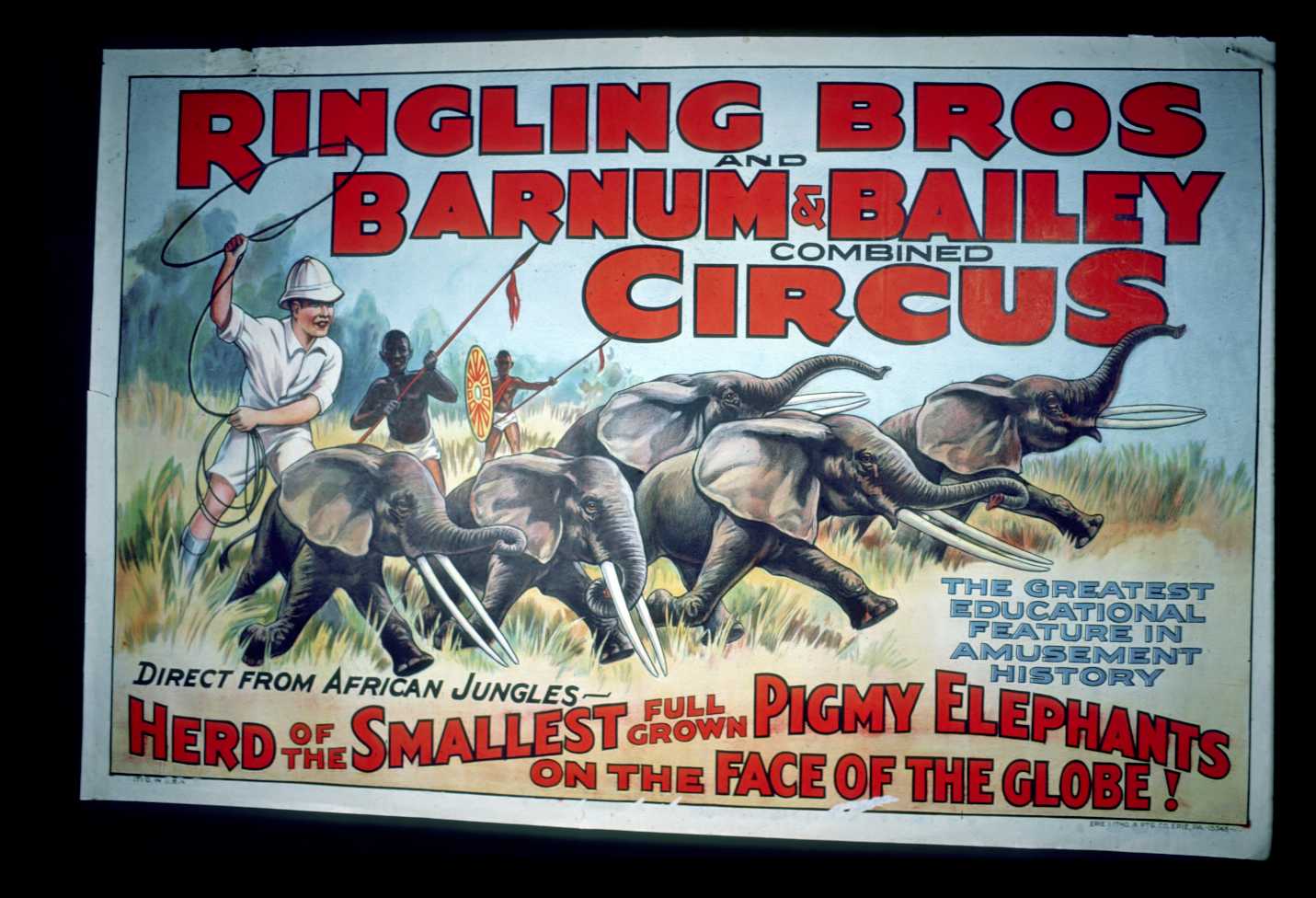
MORE PYGMY ELEPHANT STUFF

Whilst on the subject of Pygmy Elephants:

http://forteanzoology.blogspot.com/2012/02/cryptozoology-update-on-alleged-pygmy.html
http://forteanzoology.blogspot.com/2012/02/matt-salusbury-pygmy-elephant-update.html

Norman sent this:
CRYPTOZOOLOGY: Update on the alleged pygmy elephant specimens from Copenhagen University

Following on from yesterday's post about Matt Salusbury's quest for pygmy elephants, he has sent along another email from our old friend Lars Thomas.

RE: Copenhagen University expedition led by Francois Edmund Blanc to South Cameroon 1955 to collect pygmy elephants
Date: Thu, 2 Feb 2012 20:57:26 +0100
From: Lars Thomas
To: Matt Salusbury

Hi Matt,

I have just received a copy of the original log entry for the two pygmy elephants in the museum's collections. The two specimens (No. 2980 and 2981) were received on Nov. 15 1955. They were shot by Francois Edmond-Blanc in January of that year, and given to the museum by the aforementioned Bøje Benzon.


  • 2980 was a fully grown female, as it had milk in its mammary glands. It had a height of 2,02 m and a lenght of 3,05 m. The museum has the complete skeleton of that.

  • 2981 was also a female, but a younger an considerably smaller animal. Height 1,85 m and lenght 2,73 m. The museum has the skull of this one.

The museum also holds 2 ears, a tale and the sole of one foot, but it is not certain from which of these two animals.

The animals were shot close to the village of Yassonkon, close to the banks of the Nyong River south of Edea. The two animals were from a herd of 12. The 2980 specimen was the biggest of the herd, and Edmond-Blanc apparantly shot it thinking it was a male. The other animal was of medium size in the herd.

There is also a transcript of a letter from Edmond-Blanc where he writes something about the difficulty of hunting in the area, as the visibility is very poor. It is apparantly difficult to separate males and females, as both have fairly small tusks.

I have a pdf of the original log entry which I can send you if you want. It is in Danish, so you won't be able to read a word of it, but at least you can see what it looks like.

As for the photos, it might take a couple of weeks. The various beetle-infested specimens has to be frozen for several days, and there is not enough room for all of them at once. Until that has been taken vare of, none of it is availabe for photographing. But I'll let you know as soon as they become available for me to take some pictures.

best

Lars

If you want to put this on the CFZ website as well - feel free.

Monday, November 15, 2010

WE ASKED RONAN COGHLAN FOR A BLOG POST TO FILL IN THE GAPS WHILST WE AWAIT MORE NEWS FROM INDIA

In answer to your plea for interesting Indian facts, here's a little unusual information regarding Indian animals.

HOW MAHOUTS DO IT

If you have ever noticed, zoo keepers and trainers are wary of bull elephants. This is because when in a state of sexual excitement they develop musth, a condition that makes them go bananas.

However, if you've ever seen pictures of Indian elephant parades in India, you may have noticed that they have bull elephants in them. How do the mahouts driving them stop them attacking everybody in sight if they are suddenly seized with musth?

It's simple: in such parades all elephants are caparisoned with gorgeous raiment, which cover their back and sides. Musth is a nervous condition. If you were to peek under the aforementioned gorgeous raiment, you would find a network of ropes and knots. Each knot is carefully placed alongside the nexus of various nerves. If the elephant shows signs of musth, the mahout simply pulls on the end of the rope. The knots tighten on the nerve centres, stopping the progress of the musth, so it doesn't travel around the elephant's body, causing it to go wild.

So, at least, I understand.

Camels also get musth, but I don't know what you do with them. All I can suggest is speaking soothingly, but I have a funny feeling that wouldn't work.

If visiting the Punjab and you stray too near a riverbank, Indian belief will tell you to take care with any jalparis you might encounter. If you are male, a jalpari may emerge from the river. She may try to seduce you. If you rebuff her, beware! She will drown you.

Regards,

Ronan.

Tuesday, September 14, 2010

OLL LEWIS: Yesterday's News Today

http://cryptozoologynews.blogspot.com/

On this day in 1885 Jumbo the elephant died after being hit by a train. Jumbo was sold to P.T. Barnum by London Zoo in 1882 and soon after Barnum's purchase, thanks to his constant hyping of the animal to reporters, the word 'Jumbo' became a common way of describing something very large. Barnum maintained that Jumbo had died saving the life of a young circus elephant and exhibited the animal's taxidermied hide for several years after the animals death; other witnesses to the incident claim Barnum's story was complete poppycock. Knowing Barnum, it almost certainly didn't happen but well, it's a nice story...
And now, the news:

Search for the north American ape
Ice sheet in Greenland melting at record rate
Wife 'mistook husband for bear'
Australian scientists find bats have regional acce...

Fishing bats, remarkable footage (I'd mute the commentary though as it goes off on one about baseball or something unrelated for some reason and kills the mood a bit):

http://www.youtube.com/watch?v=uD46QCkLHfY

Friday, May 21, 2010

ELEPHANT PAINTING FROM MATT W


The picture on the left was sent by Matt Williams, and it reminded me irrisitibly of the 1967 debut LP by Elephant's Memory, which was by far the best thing that they did, and hardly anyone has ever heard of.

Sunday, March 07, 2010

EXCITING FIND!

The other day in Sainsbury's I happened to notice a newspaper I'd not seen before, and on the front cover was a large mock photo of a UFO blasting a crop circle into a field, alongside the headline 'TOP SECRET UFO FILES RELEASED.'

Okay, it's not that exciting a find, but I was pretty excited at the time because it was just possible that I could use the story for one of my daily blogs. However, I haven't had a chance to actually read the newspaper until today. Upon closer inspection I learnt that First News is actually an 'award-winning weekly newspaper for kids.' I was gutted.

Bu
t...

I
decided to read it, anyway, and found an absolute wealth of stuff! The ordinary Press for adults might have interesting Fortean stories in it from time to time but this paper had LOADS because kids aren't all that interested in economic policy (though there is a little of that as well).

T
he UFO article did indeed turn out to be a non-starter: in a nutshell, the Ministry of Defence have released another trenche of reports.

On page three, however, the question was asked in bold red type: 'Do elephants have a secret language?' Apparently scientists have been analysing the noises made by eight elephants in San Diego Zoo. Microphones placed on the pachyderms' bodies picked up low-frequency growls that can't be heard by human beings. The sounds are being compared to the actions elephants were performing at the time of the recordings and the final conclusions have yet to be drawn.

M
ore from First News tomorrow. Now I'm off to buy a lollipop....

Thursday, September 10, 2009

MIKE HALLOWELL: The elephantine exotic dancer

Whales are big things; except for the ones that have eating disorders. This makes it really difficult to catch them; they wiggle about a lot during the process and stubbornly refuse to get into the box, bag, net or whatever receptacle you wish to incarcerate them in.

On August 30, 1829, some fishermen "near the Fern Islands" off the coast of Northumberland saw a Big Thing floating in the water, and deduced that it was a whale. Not having worked out quite what to do with it afterwards, they got in their boat and braved the choppy waves to approach it. Not having a receptacle big enough, they simply flung a few ropes around it and towed it back to shore.

In The Historical Register of Remarkable Events (T. Fordyce, 1886) John Sykes makes a breathtaking observation: "When found, it was quite dead". This explains why it did not struggle when they tied the ropes around it, one presumes, or at least complain loudly.

When they got back to land – which they could always easily identify due to the almost complete absence of water – they measured it and discovered that from one end to the other it was no less than 58 feet.

"I reckon we should sell it", suggested one chap. "How much for?" queried another.

"I don't care as long as it will keep us in brown ale for a week", suggested yet another.

Anyway, they chopped it up into bits and flogged it for £45, which back in those days was a tidy sum.

Mind you, whales were not the most exotic animals to be found within the Geordie kingdom. Almost exactly a year later, on August 25, 1830, a remarkable chain of events started that ended in a pretty rum do. What happened was this:

On the day in question an exotic dancer arrived at Newcastle. She was called – I kid you not – Miss D'Jeck. Hoards of horniferous young males turned out to catch a glimpse of her near-naked torso as she waltzed unashamedly through the town. Their libido was somewhat dulled, however, when they noticed that Miss D'Jeck was not quite what they expected.

"Bloody hell", said one, "I don't much like the colour of her skin".

"I know", said another, "Its grey. And her toenails could do with a good clipping".

"Here", said his pal, "What's that bloody long dangly thing hanging down from her face? I know this sounds crazy, but it looks like a colossal…"

"Gawd, your right!" said a local miner from Gateshead. "I wish I had one even half as big!"

"If you did your missus would have to take up exercise classes", his compatriot jibed.

Miss D'Jeck, if you haven't already guessed, was an elephant: A good-looking, sultry specimen with come-to-bed eyes, I'll grant you, but a pachyderm nonetheless.

Miss D'Jeck hailed from Siam, and had fluttered her elephantine eyelids at all and sundry across the globe. A certain Mr. Nicholson, who was the manager of the Theatre Royal in Newcastle, had seen a pencil sketch of Miss D'Jeck and said, "Phwoar…get a load of this, lads! This'll put bums on seats!"

When it was pointed out by a stagehand that Miss D'Jeck may have been less than human, Nicholson dismissed the idea as ridiculous.

"She's a bit on the lardy side, I'll grant you, but don't try and kid me she's a bloody elephant!"

Anyhoo, Nicholson got in touch with Mr. Yates, who was Miss D'Jeck's "manager", and booked her for a show. "Great", said Yates. "We're appearing at Edinburgh at the moment, but I'll book tickets on the Ardinaple steamer from Leith and we'll be with you next week".

It sounded like a plan, but things went awry. A ferocious storm brewed up, and the captain of the Ardinaple – a right jobsworth if ever there was one – said that, fluttering eyelids or no, there was no way he was going to have Miss D'Jeck on board in case his precious boat sank. And so, dear friends, Miss D'Jeck and her manager were forced to "walk all the way to Newcastle on foot." Mind you, as most people walk "on foot" perhaps this should not surprise us. 120 miles later, a tired and somewhat jaded Miss D'Jeck arrived in the capital city of Geordieland. She was about to make history.

Now as word got around that this economy-sized Siamese temptress had arrived, squillions of blokes crammed onto the Barrass Bridge to catch a glimpse of her. Meanwhile, Miss D'Jeck – all ten foot of her – was ambling down Mosely Street and then Pilgrim Street, as Sykes put it, "with perfect indifference". She even passed by the side entrance to the Theatre Royal, which had been especially enlarged to allow her ingress.

That very evening she put on a stunning act at the theatre to a capacity crowd. Nothing untoward happened in Newcastle, but after Miss D'Jeck's last appearance things unfortunately went less than swimmingly. Nicholson, it seems, had contacted a mate of his in nearby Morpeth and told him of the Siamese Temptress's spectacular popularity. Consequently, the horniferous males of that town also wished to glimpse her burgeoning charms.

Now before I divulge what happened next, let me tell you a little about Miss D'Jeck's dietary habits. Whereas most locals got by on Rington's tea, brown ale and slabs of pork, Miss D'Jeck was rather picky and insisted on a daily consumption of "76 lbs of potatoes, 60 lbs of hay, 60lbs of straw, 11 quartern leaves, a bushel of bran, a bushel of oats and water in proportion". Now each to his or her own, say I but I wouldn't have liked to be astern of Miss D'Jeck if she suddenly decided to "drop the kids off at the pool", as they say. Unfortunately, it didn't stop there for she was also allowed to drink as much wine and beer as she could hold although spirits were forbidden. Here, of course, the locals had an advantage, for Siamese pachyderms are no match for Geordies when it comes to tolerating alcoholic beverages. She tried to keep up with them, but invariably found herself roaring drunk whilst her hosts were still only slightly tipsy. Sadly, it was in such a state of inebriation that she was encouraged to walk to Morpeth for her next show.

Now everyone knows that elephants have good memories, and Miss D'Jeck was no exception. She could remember her home in Siam, being potty-trained, recovering from elephantine colic and numerous other peaks and troughs of her existence. Unfortunately, she could also remember with crystal clarity something that had happened three years earlier.

Miss D'Jeck's trainer was a gentleman of Italian extraction called Baptiste Bernard. Now in some respects Bernard had been a good trainer, but he also had a liking for the demon drink not unakin to that possessed by his charge, Miss D'Jeck. One day, whilst extremely bladdered, he had taken exception to something Miss D'Jeck had done and stabbed her with a fork.

"I'll get you, you bastard", thought Miss D'Jeck, and she did – on the road to Morpeth.

Bernard had booked train tickets for the star and her entourage but on arriving at Newcastle Central station, she uncharacteristically refused to board her carriage. As no one in the vicinity felt capable of physically forcing her, it was decided that walking to Morpeth was the only option. In any case, it was a damn sight closer than Edinburgh.

But the cunning Miss D'Jeck was not simply a glamour-puss; she was cute as a box of monkeys, and had a plan. As soon as the entourage had left Newcastle and were out in the sticks, so to speak, the economy-sized exotic dancer lured Bernard away from his mates and promptly wrapped her trunk around his torso. This succeeded in snapping the odd rib or five, and after giving him an extra squeeze he vomited up blood. They dashed him back to Newcastle in a handcart, but it was too late. He died two days later in mortal agony.

As for Miss D'Jeck, she found that her antics had, for some reason, disinterested the good folk of Morpeth in her appearance. She was thereafter found passage on a steamer and taken to London where, metaphorically, she found the streets to be paved with potatoes, hay, straw, leaves, bran, oats, wine, beer and anything else her little heart desired. Seemingly, those born within the sound of Bow Bells weren't too bothered about the grim fate of Baptiste Bernard, and packed out local theatres in their droves to see that exotic elephantine dancer from Siam.

I do not know whether Miss D'Jeck would ever be considered as a CFZ mascot, but she'd certainly get my vote. No one gives two hoots about Baptiste Bernard any more. Miss D'Jeck, in fact, was marginally regretful of her actions. As she told the local magistrates at the time, "I'm sort of sorry I killed him...but when you're a star like me and you get stabbed with a fork, what's a girl to do?"

Friday, August 28, 2009

RICHARD HOLLAND: A teeny-tiny tusker


Once again we hand you over to guest blogger Richard Holland, editor of Paranormal Magazine and all round good bloke. He is a regular visitor to these pages and I am sure that you will all agree with me that this is jolly good news for all of us....


I had hoped to contribute more frequently than this but I guess that since I am not a cryptozoologist as such, I must content myself with shoving stuff on here as and when I stumble upon something I hope will be of interest. The following is just such an item. I found it in the ‘Curiosities’ section of the December 1915 edition of The Strand Magazine.

Recently an article appeared in the Fortean Times regarding pygmy elephants. If the following snippet is to be believed (which I guess it ain’t), elephants once lived in Myanmar which made the teeniest pygmy elephant look as big as a … well, as an elephant.

A Mr Frank Molyneux Wagstaff, of Leighton Lodge, Prome Road, Insein, Rangoon, Burma, sent a photo of perhaps the most preposterous creature ever to be submitted to a popular journal: an aquatic heffalump three inches tall. This is what Mr Wagstaff has to say about his photo:

‘The accompanying photograph shows a species of water elephant standing against a foot rule, which measures not more than three inches in height. These queer creatures are found in the Salween River, near Moulmein, and are said to be very rare. It is believed by the Burmans that the ordinary elephant will not enter a river if there is a water elephant about, as they drive their little tusks into the big elephants and poison them.

‘This one, which I photographed in Moulmein, was found hanging on an elephant’s leg one evening on his return from his bath in the river. It was killed and cured but since the photograph was taken it has been stolen from a chemist’s stores, as it is said that they are very valuable. The specimen is a full-grown one and is said to be between forty and fifty years old.’

Hmmm….

I’d love to know whether any of you crypto-types have heard of these diminutive water elephants before and whether this is the only mention of them. Incidentally, according to t’internet, Moulmein is now Mawlamyaing, Myanmar’s third largest city and is on the Salween river delta.

Richard Holland:


Tuesday, June 16, 2009

FRISWELL'S FREAKY FEATURES: Training Elephants for fun and profit

The other day Alan Friswell, the bloke who made the CFZ Feegee Mermaid and also the guy responsible for some of the most elegantly macabre bloggo postings, wrote me an email.

He had an idea for a new series for the bloggo. Quite simply he has an enormous collection of macabre, fortean, odd and disturbing magazine and newspaper articles, and he proposed to post them up on the bloggo.

Alan Writes: "Yes! Welcome to Friswell's Freaky Features! An ongoing spot on the CFZ blog page where you will encounter the fun, the freaky, the frightening and on occasion, the downright horrifying. Many of these items are from almost forgotten archives and no doubt should, in many cases, have stayed forgotten. But no chance of that on this site! So be prepared to be amazed by the bizarre manifestations of nature, the abberations of the natural world and the complete (on occasion) mind-bending insanity of collective humanity. Read on...."

What a smashing idea, we thought, and so with a burst of alliteration that will - I hope - make Dr Shuker proud of me, here we go.

I think that we all have suspicions about that way that animals are treated when they are being 'trained' for circuses, exhibitions and the entertainment industry in general but when we see the way it's done in its full, cold-blooded reality, it can inspire us to think very dark thoughts about our own species....


Modern Mechanics, July, 1931